I purchased The Ghost in the Little House: A Life of Rose Wilder Lane by William Holtz during my visit to Laura Ingalls Wilder's Rocky Ridge Farm homesite in Mansfield, Missouri. Of course, I knew that Rose was Laura's only surviving child, was an author on her own, and more well-known at the time her mother started writing, but most of what I've read about her was through the lens of her mother's eyes, so I was interested in a book that focused on her as her own person.
The Ghost in the Little House is a detailed chronical of Rose Wilder Lane's life from essentially her birth until past her death, created from the author's obvious extensive study of her papers, travels, and everything she left behind as well as her mother. I was fascinated by this book. Being a fan of psychology and getting into people's heads to a degree, I loved the light the book shed on this mother-daughter relationship. Each, mother and daughter, was her own person who outshined her husband and father, respectively, to the point that there is less in the world about him than almost anyone in the family, besides what Laura herself provided to the world, of course.
In addition to giving me a different perspective on one of my favorite and most influential authors, Laura Ingalls Wilder, this book also provided an interesting theory of the travel-writing industry. In Rose's day, an author could make money by traveling the world and sending her thoughts and observations back for publication in the states, even make a living. People couldn't travel as easily as they can today, and today, if you want to see what a location looks like, you simply log on to Google Earth or search a vast collection of images on the web. Another thing I learned was about the evolution of freelance writing - it was a much more lucrative endeavor to write as a freelancer for magazines then compared to now.
This book won't be loved by everyone (skimming the Amazon reviews will tell you that), but if you are interested in an in-depth analysis of relationships or people, you will definitely like it. You might also enjoy it if you are a big Laura fan and/or if you enjoy history. It did take me a while to read this one, just due to its length and other obligations, so on a can't-put-it-down-scale of one for I couldn't even finish it to ten for I was up until the wee morning hours, I give it a six and a half.
Source: Holtz, William. (1993). The Ghost in the Little House: A Life of Rose Wilder Lane. University of Missouri Press.
Sunday, March 12, 2017
Sunday, February 12, 2017
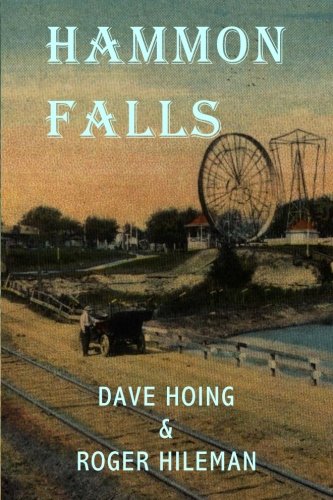
HAMMON FAlls by Dave Hoing and Roger Hileman
Dave and Roger were co-presenters at an author event I attended in early November 2016, at the West Liberty, Iowa, public library. I traded my book, Taming the Twisted, for their title, Hammon Falls.
Hammon Falls follows three generations through the years 1893 through 2008. The characters include Will; his grandmother, Margaret; his grandfather, Orville/Luka; his father, George; and his mother, Cora. Though there was a learning curve to get the characters straight in my head, it was short. I loved how these characters' stories were intertwined, going between them and back and forth in time. Generally, I don't like stories that switch points-of-view but it worked well for me in Hammon Falls. The story shows how our families' lives are tangled, for better for worse, and sheds a light on how family members relate to each other and how choices affect one another. There are no "good" or "bad" guys/gals; they all have different perspectives and experiences that give them redemption and faults. In other words, they are human.
By the end of the book, I was satisfied that all of the questions and loose ends were tied up, except for one. I never learned how Will met his wife or what happened to her. Perhaps there's a sequel coming? I also enjoyed the local connection of the story's setting; though Hammon Falls and Waterton are fictional towns, they are similar to two real towns in Iowa.
Though fiction, I think Hammon Falls depicts how a family could have evolved through history. I read this one quickly, so on a can't-put-it-down-scale of one for I couldn't even finish it to ten for I was up until the wee morning hours, I give it an eight and a half.
Source: Hileman, Roger & Hoing, Dave. (2010). Hammon Falls. All Thins That Matter Press.
UPDATE: Apparently how Will met his wife and what happened to her is mentioned the book and I obviously missed it. I still wonder if there might be a story there, though, that could be sequel fodder... :)
Hammon Falls follows three generations through the years 1893 through 2008. The characters include Will; his grandmother, Margaret; his grandfather, Orville/Luka; his father, George; and his mother, Cora. Though there was a learning curve to get the characters straight in my head, it was short. I loved how these characters' stories were intertwined, going between them and back and forth in time. Generally, I don't like stories that switch points-of-view but it worked well for me in Hammon Falls. The story shows how our families' lives are tangled, for better for worse, and sheds a light on how family members relate to each other and how choices affect one another. There are no "good" or "bad" guys/gals; they all have different perspectives and experiences that give them redemption and faults. In other words, they are human.
By the end of the book, I was satisfied that all of the questions and loose ends were tied up, except for one. I never learned how Will met his wife or what happened to her. Perhaps there's a sequel coming? I also enjoyed the local connection of the story's setting; though Hammon Falls and Waterton are fictional towns, they are similar to two real towns in Iowa.
Though fiction, I think Hammon Falls depicts how a family could have evolved through history. I read this one quickly, so on a can't-put-it-down-scale of one for I couldn't even finish it to ten for I was up until the wee morning hours, I give it an eight and a half.
Source: Hileman, Roger & Hoing, Dave. (2010). Hammon Falls. All Thins That Matter Press.
UPDATE: Apparently how Will met his wife and what happened to her is mentioned the book and I obviously missed it. I still wonder if there might be a story there, though, that could be sequel fodder... :)
Thursday, January 12, 2017
CLOUDS OVER BISHOP HILL by Mary Davidsaver
Full disclosure: This book was published by MWC Press, with which I'm affiliated as president of the board of directors of Midwest Writing Center. This is, however, an honest review (i.e. I really did like it.)
Clouds Over Bishop Hill is not historical fiction in the strictest sense (it takes place in 2008); however, the story revolves around a historical item, specifically a 1915 painting by Bishop Hill, Illinois, artist Olaf Krans. Bishop Hill is a former Swedish communal society in approximately north central Illinois. It is a real place with museums and interesting spots anyone can visit. Olaf Krans was a real artist who lived there and painted portraits of Bishop Hill's early residents. Clouds Over Bishop Hill centers on one such fictional painting (or rather, the apparent absence of it).
The story starts with feet running with a murder college graduate, Shelley Anderson, stumbles upon on her way home to Bishop Hill for the summer. In addition to the murder mystery, there's also a mystery around where and how a particular Olaf Krans painting came to be based on the foggy dreams of one of the town's elders. It is a fast-paced story with the characters encountering greed, deception, murder, and some romance, too. The main character, Shelley Anderson, embarks on a character arc that leaves her changed and more grateful for her hometown.
Clouds Over Bishop Hill will appeal especially to those familiar with Olaf Krans paintings and/or Bishop Hill, Illinois, but it is also a good cozy mystery read in general. There are murder and suspense, but nothing gory or gross. The ending is satisfying but leaves room for a sequel. I read this book relatively quickly, so on the can't-put-it-down-scale of one for I couldn't even finish it to ten for I was up until the wee morning hours, I give it an eight.
Source: Davidsaver, Mary. (2016) Clouds Over Bishop Hill. MWC Press: Davenport, Iowa.
Clouds Over Bishop Hill is not historical fiction in the strictest sense (it takes place in 2008); however, the story revolves around a historical item, specifically a 1915 painting by Bishop Hill, Illinois, artist Olaf Krans. Bishop Hill is a former Swedish communal society in approximately north central Illinois. It is a real place with museums and interesting spots anyone can visit. Olaf Krans was a real artist who lived there and painted portraits of Bishop Hill's early residents. Clouds Over Bishop Hill centers on one such fictional painting (or rather, the apparent absence of it).
The story starts with feet running with a murder college graduate, Shelley Anderson, stumbles upon on her way home to Bishop Hill for the summer. In addition to the murder mystery, there's also a mystery around where and how a particular Olaf Krans painting came to be based on the foggy dreams of one of the town's elders. It is a fast-paced story with the characters encountering greed, deception, murder, and some romance, too. The main character, Shelley Anderson, embarks on a character arc that leaves her changed and more grateful for her hometown.
Clouds Over Bishop Hill will appeal especially to those familiar with Olaf Krans paintings and/or Bishop Hill, Illinois, but it is also a good cozy mystery read in general. There are murder and suspense, but nothing gory or gross. The ending is satisfying but leaves room for a sequel. I read this book relatively quickly, so on the can't-put-it-down-scale of one for I couldn't even finish it to ten for I was up until the wee morning hours, I give it an eight.
Source: Davidsaver, Mary. (2016) Clouds Over Bishop Hill. MWC Press: Davenport, Iowa.
Saturday, November 12, 2016
LAURA WILDER OF MANSFIELD by William Anderson
I purchased several books in the Laura Ingalls Wilder Family Series while visiting the Laura Ingalls Wilder Rocky Ridge Farm in Mansfield, Missouri, in early June, 2016. Laura Wilder of Mansfield is the third in the series and the third one I read.
The book chronicles Laura Ingalls Wilder's life after she came to Manfield, Missouri. It talked about their arrival, time living in town, and years building the Rocky Ridge Farm as well as Laura's writing career and her relationship with her daughter, Rose, as well as her writing career. Also included are brief stories about Laura's travels outside of Mansfield and visits she and Almanzo enjoyed from others. To the average reader, Laura Wilder of Mansfield may be a bit boring, reading like a textbook. To huge LIW fans like me and self-proclaimed "bonnet heads," it will be fascinating.
The book definitely has a specific target reader, of which I belong. It is a short book, so due to that and my interest, on a can't-put-it-down-scale of one for I couldn't even finish it to ten for I was up until the wee morning hours, I give it a nine.
Source: Anderson, William. (1974). Laura Wilder of Mansfield.
The book chronicles Laura Ingalls Wilder's life after she came to Manfield, Missouri. It talked about their arrival, time living in town, and years building the Rocky Ridge Farm as well as Laura's writing career and her relationship with her daughter, Rose, as well as her writing career. Also included are brief stories about Laura's travels outside of Mansfield and visits she and Almanzo enjoyed from others. To the average reader, Laura Wilder of Mansfield may be a bit boring, reading like a textbook. To huge LIW fans like me and self-proclaimed "bonnet heads," it will be fascinating.
The book definitely has a specific target reader, of which I belong. It is a short book, so due to that and my interest, on a can't-put-it-down-scale of one for I couldn't even finish it to ten for I was up until the wee morning hours, I give it a nine.
Source: Anderson, William. (1974). Laura Wilder of Mansfield.
Wednesday, October 12, 2016
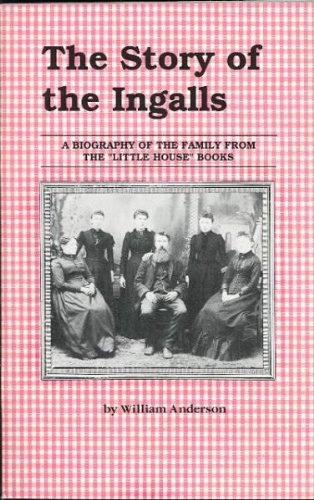
THE STORY OF THE INGALLS FAMILY by William Anderson
I purchased several books in the Laura Ingalls Wilder Family Series while visiting the Laura Ingalls Wilder Rocky Ridge Farm in Mansfield, Missouri, in early June, 2016. The Story of the Ingalls Family is the first in the series and the second one I read.
The book essentially discusses Laura's ancestors, parents, and siblings, including her immediate family's travels, the subject of most of her Little House books. It was particularly interesting to read about how May, Pa, Carrie, Mary, and Grace lived subsequent to the time period covered in the books. It also talks about Laura's life as an author and includes several interesting appendices, including Grace Ingalls' diary, family tree information, and family letters. To the average reader, The Story of the Ingalls Family may be a bit boring, reading like a textbook. To huge LIW fans like me and self-proclaimed "bonnet heads," it will be fascinating.
The book definitely has a specific target reader, of which I belong. It is a short book, so due to that and my interest, on a can't-put-it-down-scale of one for I couldn't even finish it to ten for I was up until the wee morning hours, I give it a nine.
Source: Anderson, William. (1973). The Story of the Ingalls Family.
The book essentially discusses Laura's ancestors, parents, and siblings, including her immediate family's travels, the subject of most of her Little House books. It was particularly interesting to read about how May, Pa, Carrie, Mary, and Grace lived subsequent to the time period covered in the books. It also talks about Laura's life as an author and includes several interesting appendices, including Grace Ingalls' diary, family tree information, and family letters. To the average reader, The Story of the Ingalls Family may be a bit boring, reading like a textbook. To huge LIW fans like me and self-proclaimed "bonnet heads," it will be fascinating.
The book definitely has a specific target reader, of which I belong. It is a short book, so due to that and my interest, on a can't-put-it-down-scale of one for I couldn't even finish it to ten for I was up until the wee morning hours, I give it a nine.
Source: Anderson, William. (1973). The Story of the Ingalls Family.
Monday, September 12, 2016
THE STORY OF THE WILDERS by William Anderson
I purchased several books in the Laura Ingalls Wilder Family Series while visiting the Laura Ingalls Wilder Rocky Ridge Farm in Mansfield, Missouri, in early June, 2016.The Story of the Wilders, the second in the series, was the first one I read.
Almanzo Wilder was the subject of Laura Ingalls Wilder's novel Farmer Boy and also her husband. The book describes the lives of the actual Wilders from when they lived in Malone, New York, through their travels west. In addition to containing information about Almanzo, it also talks about his life outside of Farmer Boy, his siblings, and his parents. To the average reader, The Story of the Wilders may be a bit boring, reading like a textbook. To huge LIW fans like me and self-proclaimed "bonnet heads," it will be fascinating.
The book definitely has a specific target reader, of which I belong. It is a short book, so due to that and my interest, on a can't-put-it-down-scale of one for I couldn't even finish it to ten for I was up until the wee morning hours, I give it a nine.
Source: Anderson, William. (1973). The Story of the Wilders.
Almanzo Wilder was the subject of Laura Ingalls Wilder's novel Farmer Boy and also her husband. The book describes the lives of the actual Wilders from when they lived in Malone, New York, through their travels west. In addition to containing information about Almanzo, it also talks about his life outside of Farmer Boy, his siblings, and his parents. To the average reader, The Story of the Wilders may be a bit boring, reading like a textbook. To huge LIW fans like me and self-proclaimed "bonnet heads," it will be fascinating.
The book definitely has a specific target reader, of which I belong. It is a short book, so due to that and my interest, on a can't-put-it-down-scale of one for I couldn't even finish it to ten for I was up until the wee morning hours, I give it a nine.
Source: Anderson, William. (1973). The Story of the Wilders.
Sunday, June 12, 2016
THE PILLARS OF THE EARTH by Ken Follett
I purchased The Pillars of the Earth by Ken Follett as recommended by two men in the Veteran's writing workshop I led. It is not the usual type of historical fiction I read, but they said it was good and they recommended it as instructive for setting up a detailed scenes as well as working in historical facts.
Compared to other novels I usually read, I consider The Pillars of the Earth an epic, taking place from 1123 through 1174 in England over 983 pages. I did think it was very well written; it drew me in and was full of romance, suspense, and action as well as historical detail. As the group members indicated, the author did an excellent job of creating twelfth century England; I easily imagined the landscape, towns, and different places. I also enjoyed learning about the evolution of church and cathedral architecture.
The story is told from the point of view of several characters and it's not clear until well into the book that the main characters are Aliena and Jack. The length of the book allowed me to get to know all of the characters intimately as well as care for them and want to find out what happened to them. However, it also took me a long time to really get into the story, though obviously it was interesting enough and grabbed me enough to motivate me to keep reading. I generally enjoy stories told from just one character's point of view and I've been known to skip sections told from a character's point-of-view about which I don't care, but I found myself caring about all of the characters enough in this book to read all of the sections.
Though this isn't the type of book I normally read, I am glad I did. It was a fascinating tale about characters I came to know and care about. And I did learn one way to weave historical facts through a story. It took me over two months to read this book, partly because of the length and partly because it took me some time to get hooked enough to keep going back to it, so, on a can't-put-it-down-scale of one for I couldn't even finish it to ten for I was up until the wee morning hours, I give the first half to two-thirds a six and the last half to one-third a seven and a half.
Source: Follett, Ken. (1989). The Pillars of the Earth. Signet: New York City.
Compared to other novels I usually read, I consider The Pillars of the Earth an epic, taking place from 1123 through 1174 in England over 983 pages. I did think it was very well written; it drew me in and was full of romance, suspense, and action as well as historical detail. As the group members indicated, the author did an excellent job of creating twelfth century England; I easily imagined the landscape, towns, and different places. I also enjoyed learning about the evolution of church and cathedral architecture.
The story is told from the point of view of several characters and it's not clear until well into the book that the main characters are Aliena and Jack. The length of the book allowed me to get to know all of the characters intimately as well as care for them and want to find out what happened to them. However, it also took me a long time to really get into the story, though obviously it was interesting enough and grabbed me enough to motivate me to keep reading. I generally enjoy stories told from just one character's point of view and I've been known to skip sections told from a character's point-of-view about which I don't care, but I found myself caring about all of the characters enough in this book to read all of the sections.
Though this isn't the type of book I normally read, I am glad I did. It was a fascinating tale about characters I came to know and care about. And I did learn one way to weave historical facts through a story. It took me over two months to read this book, partly because of the length and partly because it took me some time to get hooked enough to keep going back to it, so, on a can't-put-it-down-scale of one for I couldn't even finish it to ten for I was up until the wee morning hours, I give the first half to two-thirds a six and the last half to one-third a seven and a half.
Source: Follett, Ken. (1989). The Pillars of the Earth. Signet: New York City.
Subscribe to:
Posts (Atom)